





Photo: Aigars Prūsis.
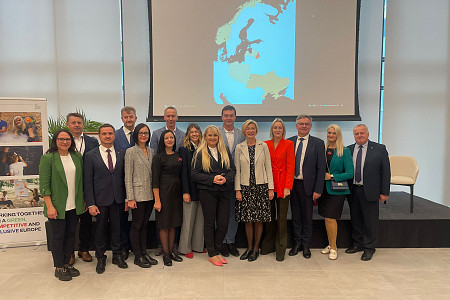
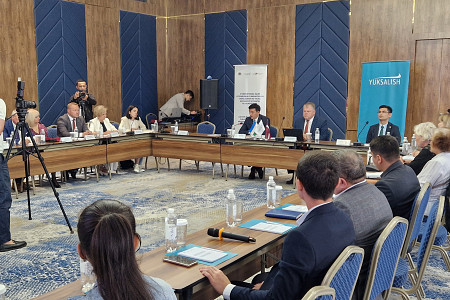
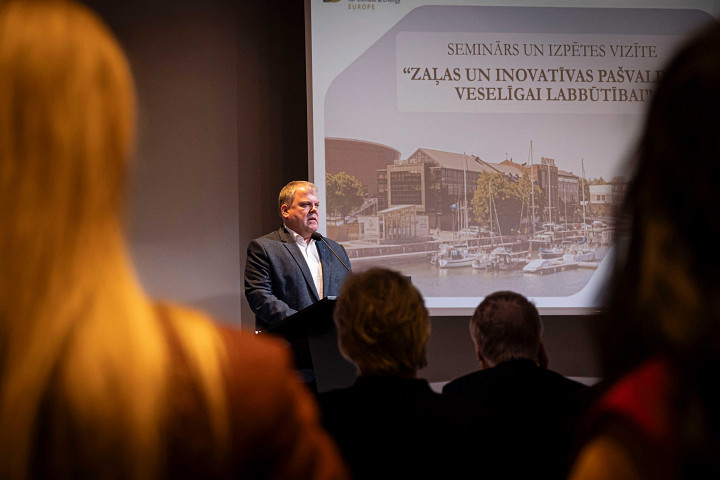
On 23 April, an international seminar and study visit “Green and innovative municipalities for healthy well-being” took place in the city of Liepāja (Latvia).
The video recording of the seminar is available at the YouTube channel of the Latvian Association of Local and Regional Governments.
At the seminar, representatives of the European Committee of the Regions, the European Commission and various institutions shared information on the link between investments in regional development and opportunities to implement activities to promote climate neutrality, receiving funding from European Union programs. Likewise, representatives of Latvian municipalities have shared good practice experiences on already implemented projects, thus promoting awareness among municipalities and opportunities to prepare high-quality projects in such programs as “Horizon Europe” or the European Institute’s of Innovation & Technology (EIT) Urban Mobility Program.
The speakers of the seminar have emphasized that being a “green” city is no longer about visual aesthetics or superficial labels. Instead, municipality leaders and experts must continuously adapt to the latest scientifically-based trends and innovations to achieve genuine sustainability and healthy urban environments.
Likewise, it was concluded, that there is a massive financial commitment at the European level to support climate neutrality, with approximately EUR160 billion earmarked for climate impact mitigation. The seminar highlighted that regional development depends on the ability of municipalities to leverage programs like “Horizon Europe” and remain flexible within EU cohesion policy frameworks to meet 2030 and 2050 climate goals.
Regarding the topic of real-time data usage in municipalities, the key innovation discussed was the use of “digital twins” and real-time data monitoring to manage urban challenges. These tools allow municipalities to visualize transportation emissions, simulate the impact of infrastructure changes, and foster public support for environmental policies by making complex data accessible to citizens.
In the second part of the seminar, participants participated at the “Climate walk” taken place in urban environment in Liepāja city, learning about specific implemented projects and activities to promote green, innovative and sustainable municipality.
The seminar was organized by the Latvian Association of Local and Regional Governments in cooperation with the “Covenant of Mayors” Secretariat, the Liepāja City Municipality and the European Climate Pact initiative, as well as with the support of the European Committee of the Regions.